CASE FILE: GN-2026-BETHSAIDA
STATUS: ACTIVE / IDENTIFICATION DISPUTED
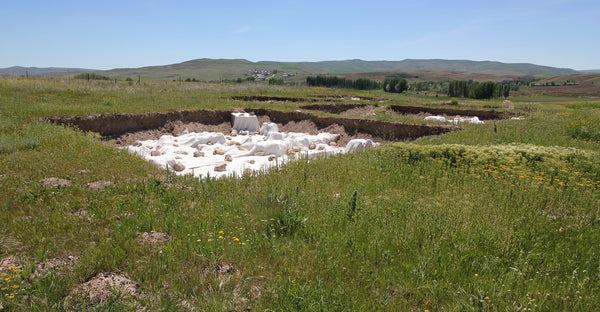
LOCATION: el-Araj, northern shore of the Sea of Galilee, Israel
FILE UPDATED: September 2026
A fishing village. A Roman city. A vanished church. Ten seasons of excavation—and one question that refuses to stay buried.
Did archaeologists finally find biblical Bethsaida?
Direct answer: Archaeologists have not conclusively proved that el-Araj is biblical Bethsaida. But the 2026 excavation season significantly strengthened el-Araj’s case. Researchers reported first-century Jewish material culture, fishing weights, Roman-period buildings, more than 150 coins, and architectural evidence consistent with a settlement that grew from a Jewish fishing village into the small Roman city Josephus called Julias. A competing location, et-Tell, remains part of the scholarly debate, and no inscription reading “Bethsaida” has yet closed the case.

The first reports from Season 10 were posted by the El-Araj Excavation Project on August 8, 2026. A summary followed on August 10, and the story drew renewed attention in late August and early September. That timing matters: the information circulating now is fresh, but the evidence belongs to a ten-season investigation that began in 2016.
Why does Bethsaida matter?
Bethsaida sits at the intersection of the New Testament, the Jewish historian Flavius Josephus, Byzantine pilgrimage tradition, and modern archaeology. The Gospel of John names it as the hometown of Philip, Andrew, and Peter (John 1:44). The Synoptic Gospels place it within Jesus’ Galilean ministry: a blind man is healed there (Mark 8:22–26), Luke connects the area with the feeding of the crowd (Luke 9:10–17), and Jesus later pronounces a warning over Bethsaida (Matthew 11:21).
Josephus supplies a second trail. In Jewish Antiquities 18.28, he reports that Philip the tetrarch elevated the village of Bethsaida to the status of a city and renamed it Julias. That creates an archaeological test: a credible site should show a lakeside settlement active in the first century, evidence of Jewish life and fishing, and signs of urban development under Rome.
EXHIBIT A: The first-century lamps
The excavation team reported one discus lamp and three intact Herodian lamps in 2026. The team dates the Herodian examples to before 70 CE and identifies them as a type manufactured in Jerusalem. They are not a name tag for Bethsaida. They are chronological evidence: people were using the site during the period in which the Gospels place Bethsaida.

EXHIBIT B: Chalkstone and a Jewish population
Fragments of chalkstone vessels appeared in every excavation square opened during the reported summer work. In the early Roman period, Jewish communities used stone vessels in connection with purity practices because stone was treated differently from pottery under Jewish law. Their presence does not identify the town by name, but the repeated pattern supports a substantial Jewish population at el-Araj in the first century.
This is important because the historical case requires more than “old ruins near the lake.” The site must fit the cultural profile of a Jewish Galilean community during the lifetime of Jesus and the apostles.
EXHIBIT C: Fishing weights where a fishing town should be
The team reports scores of fishing weights from across the excavation areas. Bethsaida is commonly understood as a fishing settlement, and the Gospels associate Peter and Andrew with that trade. Fishing equipment at a lakeshore site is expected rather than miraculous—but expected evidence is precisely what a location hypothesis should produce.
The weights establish an economy, not a biblical character. They cannot tell us which fisherman held a net or whether Jesus stood on that patch of ground. They do show that the settlement’s daily life fits the world described in the texts.
EXHIBIT D: A village becoming a Roman city
The 2026 work reached Roman levels in Areas D, F, and G. Reported finds included Roman walls, a basalt mortar, a well-preserved taboon oven, a Roman-period juglet, glassware, a half Doric capital probably associated with a public building, and more than 150 coins. The project interprets this accumulated evidence as the profile of a Jewish fishing village that developed into a modest Roman polis.
That sequence is the heart of the Josephus comparison: village first, then Julias. A decorative architectural fragment or a coin hoard cannot independently prove the city’s name. Together, however, they help test whether the settlement had the scale, chronology, and urban character the ancient historian described.
EXHIBIT E: The Church of the Apostles
Earlier seasons uncovered a large Byzantine basilica at el-Araj. A 2022 mosaic inscription includes a petition for the intercession of Peter, described by a title Byzantine Christians regularly applied to him. Excavators connect the church with an eighth-century pilgrimage account attributed to Willibald, who said a church stood at Bethsaida on the site traditionally identified as the house of Peter and Andrew.
This is strong evidence for Byzantine memory: Christians in late antiquity associated the location with Peter. It is not direct first-century proof. A church built centuries after Peter can preserve an authentic tradition, a mistaken tradition, or a mixture of both. The inscription makes the site’s Christian identification more specific, but it does not spell the word “Bethsaida.”
The other suspect: et-Tell
El-Araj is not the only proposed location. Et-Tell, farther from the modern shoreline, has been excavated for decades and has long been identified by its excavators as Bethsaida. Its remains are substantial, including Iron Age and later occupation. Supporters argue that geological change, sediment, and ancient lake levels can explain the distance from today’s water.

El-Araj’s advocates answer that its position near the northern shore better fits a fishing village and that its Roman-period evidence now matches the required first-century profile. The dispute cannot be settled by distance alone. Ancient shorelines shift, rivers deposit sediment, and place-names can move. The responsible question is not “Which site feels right?” but “Which location best explains all the textual, geographic, and material evidence with the fewest exceptions?”
CASE TIMELINE
- First century CE: The Gospels name Bethsaida; Josephus reports its elevation to the city of Julias.
- Eighth century: Willibald’s pilgrimage account describes a church at Bethsaida associated with Peter and Andrew.
- 2016: Systematic excavation begins at el-Araj.
- 2019–2021: Excavators expose the Byzantine basilica and mosaic floors.
- 2022: A Greek mosaic inscription invoking Peter is announced.
- 2026, Season 10: Researchers report first-century lamps, chalkstone vessel fragments, fishing weights, Roman buildings, glassware, a Doric capital fragment, and more than 150 coins.
- October 2026: The project lists another excavation session, meaning the file remains active.
HEADLINE AUDIT: What the evidence does—and does not—say
“Archaeologists found Bethsaida.” Too certain.
“New discoveries prove the Gospels.” Too broad. Archaeology can test geography, chronology, settlement patterns, and cultural details; it cannot excavate every theological claim.
“Nothing biblical was found.” Misleading in the opposite direction. The first-century Jewish and fishing evidence is directly relevant to evaluating a proposed New Testament location.
Responsible headline: The 2026 finds strengthen el-Araj’s identification as biblical Bethsaida, while the final identification remains disputed.
THE VERDICT
El-Araj is a leading candidate for Bethsaida-Julias, and Season 10 made the case materially stronger. The combination is unusually coherent: first-century occupation, Jewish stone vessels, a fishing economy, Roman urban development, and a later church explicitly connected with Peter in Byzantine devotion.
But the decisive exhibit is still missing. There is no excavated inscription naming the city “Bethsaida” or “Julias,” and et-Tell has not disappeared from the map. The strongest responsible conclusion is therefore neither dismissal nor triumphal certainty:
The evidence fits. The identification is persuasive. The case is not closed.
Frequently asked questions
Where is el-Araj?
El-Araj lies on the northern shore of the Sea of Galilee in Israel, near the Jordan River delta and within the Beteiha area.
What did archaeologists find at el-Araj in 2026?
The Season 10 summary reports a discus lamp, three intact Herodian lamps, chalkstone vessel fragments, scores of fishing weights, more than 150 coins, Roman walls, a taboon oven, a basalt mortar, glassware, a Roman juglet, and half of a Doric capital.
Why are Herodian lamps important?
They help date activity at the site to the early Roman period, including the first century. They support the required timeline but do not identify the settlement by name.
Was Bethsaida the hometown of Peter?
John 1:44 identifies Bethsaida as the town of Philip, Andrew, and Peter. Later Christian tradition associated a church at the site with the house of Peter and Andrew.
Did archaeology prove a miracle happened at Bethsaida?
No. Archaeology can establish that a settlement existed in the correct period and evaluate its geography, culture, and economy. It cannot independently demonstrate that a reported miracle occurred.
Why is the identification disputed?
Because both el-Araj and et-Tell have archaeological arguments, ancient geography is complex, and no unambiguous inscription naming Bethsaida has been found at el-Araj.
RECEIPTS: Open the evidence locker
- El-Araj Excavation Project: Season 10 final-week field summary — the closest source to the 2026 excavation team.
- Associates for Biblical Research: August 10, 2026 summary of the first-century finds.
- Biblical Archaeology Society: el-Araj project overview, directors, chronology, and 2026 sessions.
- Museum of the Bible: project sponsorship and excavation overview.
- Bethsaida-Julias EAEP: project home, season reports, media, and the Peter inscription announcement.
- Bible Archaeology Report: detailed evaluation of el-Araj as a candidate.
- Josephus, Jewish Antiquities Book 18: ancient literary reference to Bethsaida-Julias.
Continue the investigation
Read the Gospel Noir Case Note Jesus Tomb Archaeology: What Was Found Beneath the Holy Sepulchre, watch investigations on the official Gospel Noir YouTube channel, or enter the Gospel Noir collection.
Relevant evidence files:
Editorial note: Gospel Noir distinguishes excavation-team interpretations from independently established facts. “Bethsaida,” “Bethsaida-Julias,” and “el-Araj” are used precisely; contextual photographs are labeled when they do not show the 2026 discoveries. This file will be updated if the October 2026 season produces material evidence that changes the verdict.
FILE UPDATED. CASE NOT CLOSED.
Continue the investigation.
Watch Gospel Noir case files, evidence shorts, and the Detective’s investigations, then explore the artifacts built from the archive.
10% off your first order.
Plus new Case Notes, Gospel Noir releases and store updates.