CASE NOTE: THE LAST STOP BEFORE THE TEMPLE
Beneath Jerusalem, archaeologists have uncovered a monumental purification complex from the world of the New Testament.
CASE STATUS: ACTIVE
LOCATION: Ophel, Jerusalem
PERIOD: Late Second Temple Period
EVIDENCE TYPE: Archaeology / Historical Context
DISCOVERY ANNOUNCED: September 24, 2026
Jerusalem keeps records differently than humans do.
Paper disappears. Witnesses die. Kingdoms change names.
Stone waits.
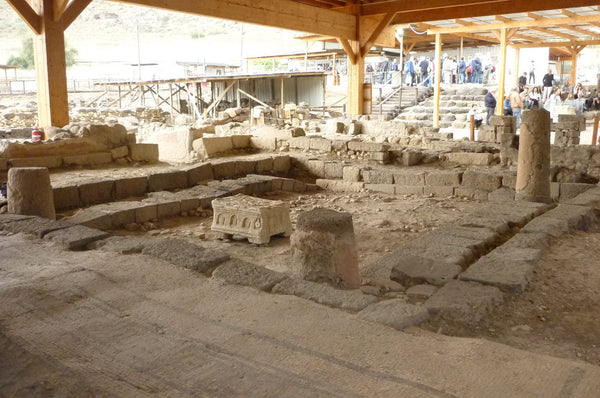
Immediately south of the Temple Mount, archaeologists have spent five excavation seasons working through the Ophel. What emerged was not another isolated pool. It was an entire purification complex: three large ritual baths, a monumental plastered pool, paved space and an extensive water-management system. Beneath the later complex, excavators also found evidence of an earlier purification installation.
The location is difficult to ignore. The complex lies roughly 50 meters from the Triple Gate, part of the southern entrance system of the Second Temple complex.
Your archaeologists uncovered the infrastructure. Your ancient texts preserve the ritual world around it. The job here is to keep those two files separate until the evidence permits them to meet.
EXHIBIT A: 280 SQUARE METERS OF STONE

The excavation is directed by Prof. Uzi Leibner and Prof. Orit Peleg-Barkat of the Hebrew University of Jerusalem's Institute of Archaeology, in cooperation with the Armstrong Institute of Biblical Archaeology.
The newly publicized complex covers approximately 280 square meters, about 3,000 square feet. It includes a large rectangular plastered pool measuring roughly 12 by 9.5 meters and a finely built ashlar structure containing four rooms. Three of those rooms have been identified as ritual immersion baths, or mikva'ot.
According to Leibner, numismatic evidence places construction of the main complex around 10 CE, in the early first century.
That date matters. It places the structure directly inside the historical period described by the New Testament. That observation requires no theological conclusion. It is simply chronology.
EXHIBIT B: THE BATH THAT SURVIVED

One of the ritual baths survived from floor to vaulted stone ceiling, approximately 4.2 meters, or 13.8 feet, high. The excavation team describes that degree of preservation as exceptionally rare for a Second Temple-period structure in Jerusalem.
A shaft above the chamber appears to have supplied water. Two of the mikva'ot preserve carefully cut stone steps. One staircase also contains a low divider. The excavators interpret that divider as a way to separate people descending toward immersion from those ascending after it.
It is a small architectural detail, but it records behavior in stone: movement mattered. Ritual status mattered. The route in and the route out were not necessarily the same.
EXHIBIT C: THE WATER SYSTEM
The three baths contain drains connected to a substantial underground drainage network. In places, the channels rise more than two meters high, large enough for a person to walk through, and carried water toward the Kidron Valley.
The system has led the excavation team to investigate whether the complex received a more continuous water supply, possibly connected to the aqueduct system that supplied the Temple Mount.
That connection has not been fully demonstrated.
Keep that distinction in the file. Archaeologists have identified the drainage system. The precise route by which water entered the complex remains under investigation.
EXHIBIT D: THE GATE
The baths were not constructed in an arbitrary corner of Jerusalem. They stood beside the southern approach to the Temple Mount, near the Triple Gate and the monumental staircase associated with the Hulda Gate system.
Numerous ritual baths were already known from the Ophel and the southern approaches. What makes this complex remarkable is its concentration, scale, engineering and preservation.
Leibner and Peleg-Barkat interpret the site in the context of Second Temple pilgrimage. Current reporting describes the complex as infrastructure capable of serving large numbers of people approaching the Temple. The exact social composition of everyone who used these particular baths cannot be recovered from the stones alone.
That is where the archaeological file stops.
Then another file enters the room.
EXHIBIT E: THE TEXT
The Gospel of John records a specific detail immediately before its account of Jesus' final Passover:
“And many went out of the country up to Jerusalem before the passover, to purify themselves.”
John 11:55
The verse does not identify these baths. It does not say Jesus used them. It does not identify this particular complex at all.
Those claims would cross the evidence line.
What the text does establish is narrower: people traveled to Jerusalem before Passover for purification.
The Hebrew Bible supplies the broader ritual framework. Exodus 30:17–21 describes washing requirements specifically for priests approaching sacred service. Leviticus 15 describes circumstances of ritual impurity involving washing. Numbers 19 addresses purification following contact with the dead. Deuteronomy 16:16 establishes the three annual pilgrimage festivals of Unleavened Bread, Weeks and Booths. Acts 21:26 later depicts Paul participating in purification connected with the Temple.
These passages describe different people and different circumstances. They should not be flattened into one universal rule.
But they establish independently of the excavation that purification, pilgrimage and Temple worship belonged to the religious world of ancient Judaism.
TWO FILES. ONE HISTORICAL WORLD.
This is where investigations often go wrong.
Humans discover something compatible with an ancient text and immediately announce: PROOF.
That is not what this discovery establishes.
Archaeology has not demonstrated that Jesus entered one of these baths. It cannot name the pilgrims who descended these steps. It does not prove every theological claim in the New Testament.
What it does provide is physical infrastructure from the correct historical period, in the correct location, serving the kind of ritual-purification world independently described in Jewish and New Testament texts.
John describes people arriving in Jerusalem before Passover to purify themselves.
The ground preserves substantial first-century purification infrastructure beside a principal approach to the Temple Mount.
The two records are compatible.
Nothing needs to be added.
EXHIBIT F: SOMETHING WAS UNDERNEATH
The investigation did not end with the early-first-century complex.
Beneath it, excavators uncovered an earlier purification installation, including another large ritual bath. The team currently places that earlier phase probably in the first century BCE, in the late Hasmonean or early Herodian period.
Later construction cut through part of the earlier installation.
The implication is straightforward: ritual-purification activity at this location appears to predate the monumental complex built above it.
The later structure was not necessarily the beginning of the story.
EXHIBIT G: 70 CE

The final layer is destruction.
Excavators recovered dozens of coins associated with the First Jewish-Roman War from the complex, alongside destruction debris. Finds from the wider excavation include a silver half-shekel from Year Three of the revolt.
The excavation team associates the end of the complex with the Roman destruction of Jerusalem and the Second Temple in 70 CE.
The purification center stopped functioning.
The Temple fell.
For centuries, later construction covered what remained. Byzantine builders eventually sealed portions of the earlier architecture beneath their own structures, inadvertently helping preserve the vaulted bath.
The stones waited.
WHAT THE EVIDENCE SAYS
The current evidence supports a careful conclusion.
A substantial ritual-purification complex operated immediately south of the Temple Mount during the early first century CE. It included three large mikva'ot, a monumental pool and an unusual water-management system. An earlier purification installation existed beneath it. Its position beside a major southern approach and its scale lead the excavators to interpret the complex within the infrastructure of Second Temple pilgrimage.
Ancient biblical texts independently document ritual purification, pilgrimage to Jerusalem and Temple worship. John 11:55 specifically records people traveling to Jerusalem before Passover to purify themselves.
What the evidence does not establish is equally important.
It does not prove that Jesus used these baths. It does not identify a New Testament individual who entered them. It does not transform archaeology into proof of Christian theology.
That is not a weakness.
It is the boundary of the evidence.
A detective who crosses that boundary stops investigating and starts selling.
THE LAST STOP
Jerusalem. First century.
The Temple rises above the southern approach. Pilgrims arrive for the festivals. Stone steps descend toward water.
Somewhere inside that same historical world, a text would preserve the detail that before Passover, people went up to Jerusalem to purify themselves.
Nearly two thousand years pass.
The Temple is gone. The pilgrims are gone. Rome is gone. The water stopped running long ago.
Then humans returned with brushes, buckets, cameras and notebooks.
And opened the file again.
File updated. Case not closed.
Sources & further reading
This Case Note distinguishes direct archaeological observations from the excavators' interpretations. Primary excavation reporting and photographs are available from the Hebrew University/Ophel excavation project and its research partners. Independent reporting was cross-checked against interviews with the excavation directors.
Ophel Excavation 2026 field updates and photography
The Times of Israel: Ancient public mikveh complex uncovered at foot of Temple Mount
Biblical references checked: Exodus 30:17–21; Leviticus 15; Numbers 19; Deuteronomy 16:16; John 11:55; Acts 21:26.
10% off your first order.
Plus new Case Notes, Gospel Noir releases and store updates.